Leadership Skills Every Professional Should Develop
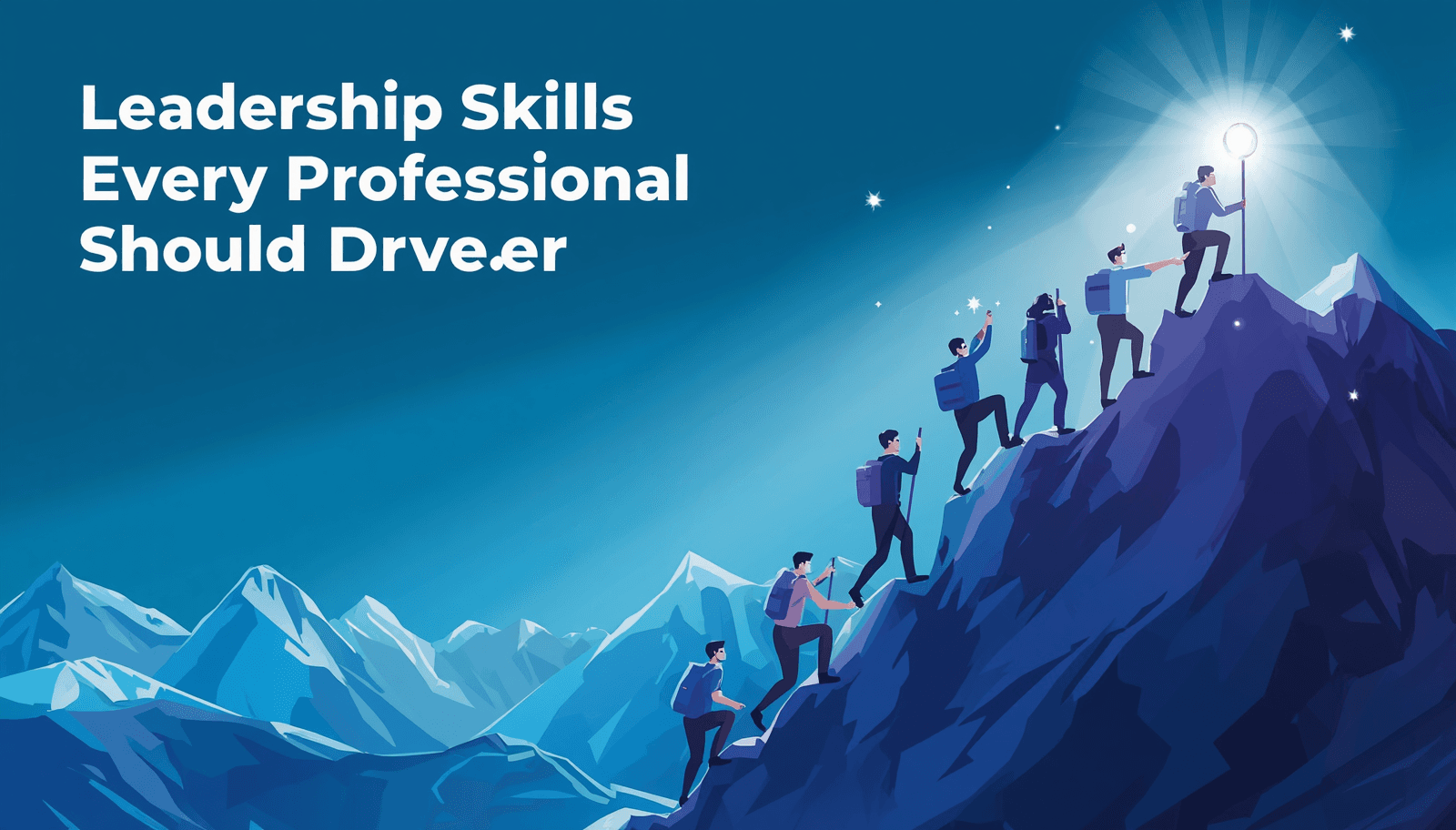
Why Leadership Skills Matter in Modern Careers
Leadership is often misunderstood as a quality that applies only to managers or senior executives. In reality, leadership skills are valuable for professionals at every stage of their careers. Regardless of job title, individuals who demonstrate leadership qualities often stand out in the workplace because they contribute to team success, solve problems effectively, and inspire others to perform at their best.
Across Africa’s rapidly evolving labor markets, employers increasingly seek professionals who possess both technical expertise and strong leadership capabilities. As organizations expand and adopt modern technologies, they require individuals who can coordinate teams, communicate effectively, and guide projects toward successful outcomes.
Leadership skills also play a crucial role in career advancement. Professionals who demonstrate initiative, decision-making ability, and the capacity to motivate others are often considered strong candidates for promotions and management roles.
In many industries, leadership is closely linked with problem-solving and strategic thinking. Employees who can analyze challenges, propose solutions, and guide colleagues through complex tasks contribute significantly to organizational growth.
Our guide on Top Workplace Skills Employers Look for in Africa explores how leadership competencies are among the most valuable attributes employers evaluate when hiring or promoting professionals:
Research from the World Economic Forum also highlights leadership and social influence as essential future workforce skills.
In this article, we examine the most important leadership skills professionals should develop and explain how these competencies contribute to long-term career success.
Communication Skills
Effective communication is one of the most fundamental leadership abilities. Leaders must clearly express ideas, provide guidance to team members, and ensure that information flows smoothly within organizations.
Communication involves both speaking and listening. Strong leaders not only explain their expectations clearly but also listen carefully to feedback, concerns, and suggestions from colleagues.
Poor communication often leads to misunderstandings, missed deadlines, and conflicts within teams. In contrast, professionals who communicate effectively help teams collaborate more efficiently and maintain positive working relationships.
Leaders frequently communicate through various channels, including meetings, presentations, emails, and written reports. Each format requires clarity and precision so that information is easily understood.
Digital communication has also become increasingly important in modern workplaces. Remote teams rely on virtual collaboration tools to coordinate tasks and share updates.
Our article on Communication Skills in African Workplaces explains how professionals can improve their ability to express ideas clearly and collaborate effectively:
Professionals who master communication skills often become trusted team members and influential leaders within their organizations.
Decision-Making Ability
Leadership requires the ability to make informed decisions, often under conditions of uncertainty. In business environments, decisions may involve allocating resources, solving operational challenges, or selecting strategic directions for projects.
Effective leaders gather relevant information, analyze potential outcomes, and evaluate risks before making decisions. They also consider input from colleagues and subject-matter experts when appropriate.
However, leadership also requires confidence. Excessive hesitation can delay progress and reduce organizational efficiency. Professionals must learn to balance careful analysis with decisive action.
Decision-making becomes particularly important when teams face complex problems or unexpected challenges. Leaders who remain calm and focused during difficult situations help maintain team morale and guide colleagues toward effective solutions.
According to research from the Harvard Business Review, strong decision-making skills are closely associated with effective leadership and organizational success.
Professionals can improve their decision-making abilities by practicing critical thinking, studying case studies, and reflecting on past decisions to identify lessons learned.
Emotional Intelligence
Emotional intelligence refers to the ability to understand and manage one’s own emotions while also recognizing and responding effectively to the emotions of others.
Leaders with high emotional intelligence are often better at resolving conflicts, building trust within teams, and maintaining positive workplace environments.
Emotional intelligence includes several components such as self-awareness, empathy, and emotional regulation. Self-aware leaders understand their strengths and weaknesses, while empathetic leaders recognize the perspectives and feelings of colleagues.
In workplaces where employees collaborate closely on projects, emotional intelligence helps maintain constructive relationships even during stressful situations.
Leaders who demonstrate empathy and respect often inspire greater loyalty and motivation among team members.
Research from Daniel Goleman Leadership Institute shows that emotional intelligence plays a critical role in leadership effectiveness and organizational performance.
Professionals who cultivate emotional intelligence often become more effective mentors and team leaders.
Strategic Thinking
Strategic thinking is the ability to analyze complex situations and plan actions that lead to long-term success. Leaders must consider not only immediate tasks but also how their decisions influence future outcomes.
Strategic thinkers evaluate trends, identify opportunities, and anticipate potential challenges before they arise. This forward-looking perspective helps organizations remain competitive and adaptable.
Professionals who demonstrate strategic thinking often contribute valuable insights during planning discussions and project development.
Strategic thinking also involves prioritization. Leaders must determine which initiatives deserve attention and resources in order to achieve organizational goals.
Our article on High-Growth Industries in East Africa explains how professionals who understand economic and industry trends can make strategic career decisions:
Developing strategic thinking skills requires continuous learning about industry developments, economic trends, and organizational objectives.
Team Building and Collaboration
Leadership is not only about guiding tasks but also about building strong teams. Successful leaders understand how to bring individuals with different skills and perspectives together in order to achieve shared goals.
Team building involves creating an environment where colleagues feel respected, motivated, and empowered to contribute their ideas.
Leaders encourage collaboration by recognizing individual strengths and assigning responsibilities that match each team member’s expertise.
A collaborative work environment promotes innovation because diverse perspectives often lead to creative solutions.
Strong leaders also support team development by providing mentorship and constructive feedback. By helping colleagues grow professionally, leaders strengthen the overall capabilities of their teams.
Our guide on Professional Relationships in African Workplaces explains how collaboration and trust are essential for successful teams:
Organizations that foster teamwork often experience higher productivity and stronger employee satisfaction.
Adaptability and Continuous Learning
Modern workplaces are constantly evolving due to technological innovation, changing market conditions, and global economic developments.
Leaders must therefore remain adaptable and open to learning new skills. Professionals who resist change may struggle to remain effective in dynamic environments.
Adaptable leaders embrace new technologies, experiment with innovative solutions, and encourage their teams to explore creative approaches to problem-solving.
Continuous learning is an essential part of leadership development. Leaders who seek new knowledge through training, reading, and professional development remain informed about emerging trends.
Our guide on Free Platforms to Learn Digital Skills Online explains how professionals can continue expanding their knowledge through accessible learning resources:
Adaptability ensures that leaders remain effective even as industries evolve and organizations adopt new technologies.
Conclusion
Leadership skills are essential for professionals who want to succeed in modern workplaces. Effective communication, sound decision-making, emotional intelligence, strategic thinking, teamwork, and adaptability all contribute to strong leadership.
These competencies allow professionals to guide teams, solve complex problems, and contribute to organizational success. While leadership abilities may develop over time, individuals who actively cultivate these skills often experience significant career growth.
As African economies continue expanding and adopting new technologies, professionals with leadership capabilities will play an important role in driving innovation and economic development.
Frequently Asked Questions (FAQ)
What are the most important leadership skills?
Key leadership skills include communication, decision-making, emotional intelligence, strategic thinking, teamwork, and adaptability.
Can leadership skills be learned?
Yes. Leadership abilities can be developed through experience, mentorship, training programs, and continuous professional development.
Why are leadership skills important for professionals?
Leadership skills help professionals guide teams, solve problems effectively, and advance their careers within organizations.
How can I improve my leadership skills?
You can improve leadership skills by practicing communication, seeking feedback, learning from mentors, and studying leadership strategies.
Do employers value leadership skills?
Yes. Many employers prioritize leadership abilities because they contribute to teamwork, productivity, and organizational growth.